
Watermelon Rind Pickles
3.4/4
Reviews (43)
219
Have Made It
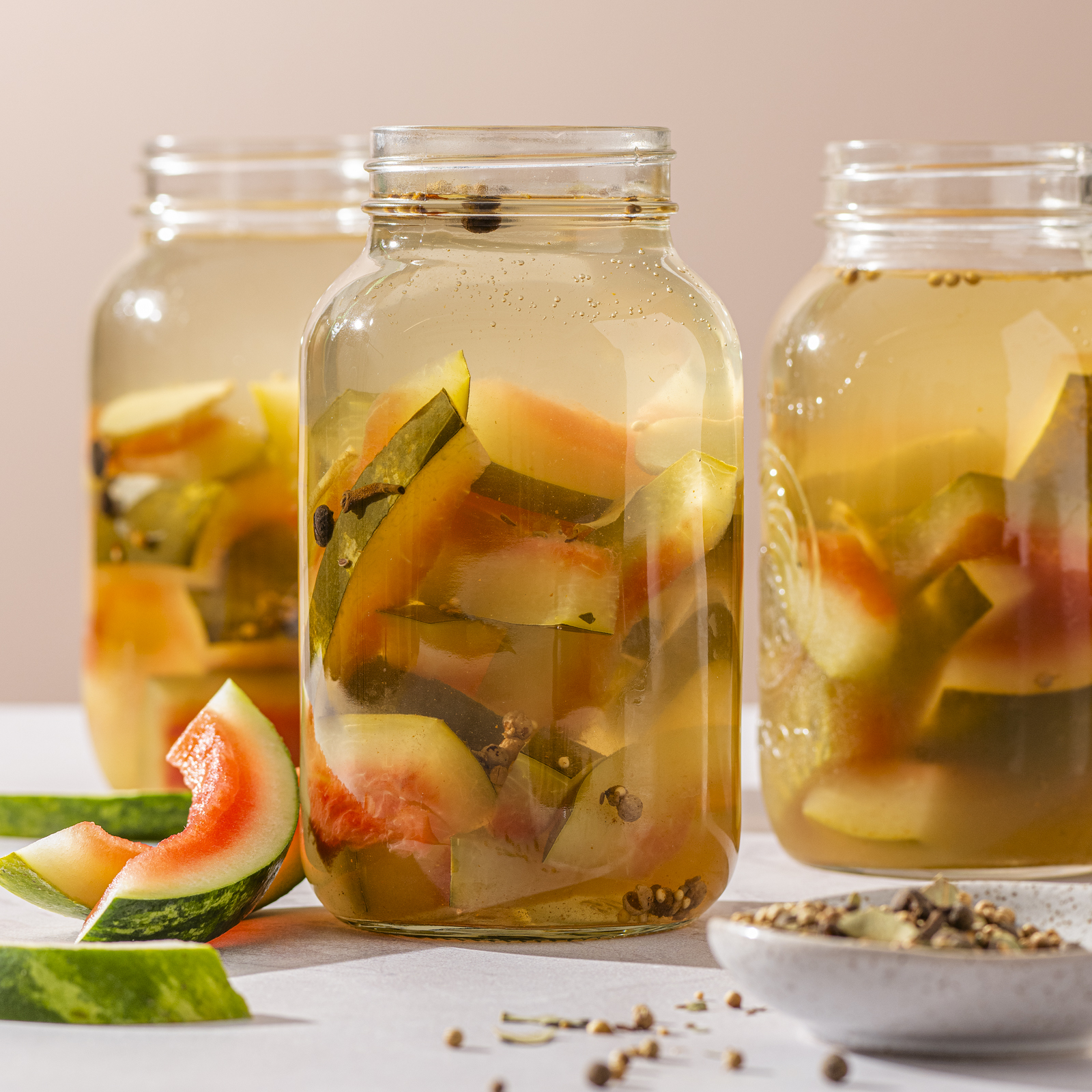
Created by Chef Dave Woolley, we love these watermelon rind pickles that leave the slightest bit of red flesh for a beautiful color and taste experience! You can opt to cut off the outer green peel if you prefer a more uniform texture.
Watch the recipe video below.
Ingredients
Instructions
- In large pot, bring water and salt to boil over medium high heat. Add rind pieces and boil until tender, about 5 minutes. Strain, reserving liquid, and transfer rinds to a large glass or plastic bowl.
- In saucepan, combine reserved liquid with remaining ingredients. Bring to a boil over medium high heat, stirring until sugar dissolves. Simmer for 15 minutes, until slightly reduced. Pour over watermelon rinds in bowl. Place plate over top to keep rinds submerged in liquid. Cover and refrigerate for one day. Transfer to a glass jar and keep sealed in the refrigerator for up to 2 weeks.
- Serving suggestion: enjoy with your favorite deli meats and cheeses, perhaps with other pickled veggies for a tasting party.


Reviews
Excellent. Can’t wait try
Fantastic recipe! Made a batch yesterday and they are amazing! Thank you so much for sharing it. I am wondering what the purpose is of step to put the pickles on a large bowl and cover with a plate to submerge. If the pickles are put in a jar and completed submerged can that step be skipped?
I made a batch last pm, and they were delicious! Thank you so much for sharing this recipe! Can you tell me what the purpose is of this step, “Pour over watermelon rinds in bowl. Place plate over top to keep rinds submerged in liquid. Cover and refrigerate for one day. ” I’m wondering if that step be skipped if the pickles are submerged in the liquid in a jar?
I used half the salt and eliminated the celery seed and “pickling spice”, but added two cinnamon sticks, one star anise, 1/2 tsp fennel seeds, seven all spice berries (instead of only one) a bay leaf, 1 tsp coriander seeds, juice from half a lemon, one cardamom pod, and about a 1 inch piece of peeled and sliced fresh ginger root. Everything else I kept the same.
They are Amazing!!!! thank you for the inspiration to make these 🍉
I have been searching for a good watermelon rind pickle recipe for awhile. I remember my Aunt used to make what we called as kids “Christmas pickles” because she always brought them out over the season especially on Christmas. Some had a red juice some were green but they were all the Red, White, and Green which just reminded you of Christmas. She canned them every year, sadly she passed away without telling us her recipe. I so miss them even 50 years later.
For what purpose is this used
Watermelon Rind Pickles can have a variety of uses. Enjoy as a condiment on sandwiches of your favorite deli meats and cheeses, a pickled veggie option on a charcuterie board or just as a snack.
I was surprised by this recipe and liked it a lot. Accidentally left part of the jar in the fridge for months (can’t remember exactly how many). Opened it today and it was fizzy. Doesn’t smell bad, but I’d rather not try out my luck (did I accidentally make watermelon alcohol)
Pickled watermelon rind has been around for centuries.
I remember when my mom used to make them love them
How do you peel a watermelon???
You can actually use your vegetable peeler tool, just like you would a cucumber.
This recipe was an unmitigated disaster. Even using a tiny watermelon, I had 6-8 cups of rinds, so I tripled the recipe and ended up with an insane amount of unbearably salty liquid despite cooking it down for around 30 minutes..
On top of that, peeling the rinds makes them even more soggy from boiling them, making it difficult to strain off the excess salty liquid and replace it with the pickling liquid, itself too salty.
I knew the salt seemed crazy when I read it, and I was not wrong. Peeling was also extra labor for a worse outcome in both texture and appearance.
We are sorry to hear this recipe didn’t come out for you. This is a staff favorite here and we’ve followed the instructions exactly (not tripling the recipe). We hope you give another rind pickle recipe a try — it’s a terrific way to use up all that rind from your watermelons!
Awesome
This is so refreshing. I love the texture and color. Perfect balance of sweet and tart. I adjusted the spice to my taste. Would use more ginger next time.
Why does the instructions say “In saucepan, combine reserved liquid with remaining ingredients.” and in the video they only use a small amount of liquid?
Why do we boil it in the start with salt water?
The chef who made the recipe included that step. We believe it to be part of the tenderizing process.
Delicious sweet pickles with a tiny bit of ginger flavor, and definitely tastes like a pickle! I liked it best without the rind. I might like the rind best cut into bite sized pieces. Next time I will cut into slices with a wavy slicer blade. This time I cut into 4″ long spears so they fit into pint jars. I had added in extra watermelon slices and was able to stuff them all into 2 pint jars. I pushed the spices and slices of ginger down in the jar toward the sides of the glass jar so you could see it. This recipe made 2 pint jars of pickles with extra liquid left over that I will stick cut cucumbers into.
The recipe says PEELED rind., and the photo shows peeled rind. But your video shows rind on the watermelon. S o which one is it?
There is an inconsistency between the recipe photo and the video. In fact, you can leave the rind on. It is fully edible. Generally people prefer to peel off the green skin, but as the video shows it can be elected to be left in tact. Once cooked it makes the pickles have a bit chewier of a texture.
Grandmother made these for me years ago. Now my husband is our pickle maker! He is going to make some of these for me.
This recipe is fantastic. I had doubts, but following the recipe exactly yielded crunchy pickles that were both tangy and sweet. Making this for my next charcuterie board!
I love this recipe. It brought back memories of my mom. She use to make pickled watermelon rind every summer. She has been gone for 24 years now, so thanks for the memories.
I just noted someone that was concerned about the unused outer skin so I thought I would offer a recipe from my collection that ONLY uses the outer rind!
Sweet Watermelon Rind Pickle from “The Easy Kitchen -Preserves & Pickles,” page 126. The ISBN number is 978-1-84075-449-1.
This is different in that it uses the outer green rind so you can get yet another product from that melon! This recipe does not give clear instructions for how thick the rind pieces should be but the photo shows very little white beneath the peel. And for some reason this recipe makes 13 ounces. It cannot be canned but does require aging for a month.
I do not wish to violate copyright so I am pointing you to the recipe . If there is interest I can perhaps modify it enough to share without copyright infringement.
I made these last year and am now about to make another batch. This is one of the very few recipes I have found that use a long portion of rind. I like this presentation much better than the usual 3/4 to 1″ cubes, which remind me more of a pickle relish than an actual pickle.
Use whole spices where possible and let those pickles mature for a few months for what I feel are the best results.
Great recipe I used the ground allspice, celery salt and half the sugar regular white vinegar, added some lemons and cinnamon sticks and wow….
I love this recipe because it has less sugar than many of the others. I have canned these using a water bath, and they seem to hold up fine during long term storage.
It seems that you have not peeled the green skin off the watermelon in the video, yet suggest that you do this in the recipe. Which is best?
Peeling the skin is a personal preference. However, when we tout that 100% of the watermelon is edible, the skin (or peel) definitely must be cooked. With the skin on, the texture on the outside has more of a “chew” to it, but it is pleasant and unique.
Hi! I am also developing a recipe for watermelon rind pickles for a state agriculture agency, and I would really like to know if anyone at the Watermelon Board believes it is a food safety issue to skip the soaking step. I find the texture to be just fine without soaking when making a refrigerator pickle such as this one, but maybe if they are stored for a long time they would become limp instead of staying crsip. If someone at your organization knows anything about the science behind the soaking beyond textural concerns, please let me know! I hope a canning recipe on your end is on the way as well!
We do not believe it is a food safety issue, to skip the soaking step. It’s simply a quality/texture issue.
Back to the canning question. Is there a reason to soak overnight or can I just pour the hot mixture right over the softened rinds so the lid can seal?
We found this great answer from Our Everyday Life: You help ensure the crispness and flavor of your finished pickles by soaking them before pickling to improve their texture and taste. Whether you soak them in ice water, salted water or a lime-water solution, an overnight soak is an important step in many recipes to create quality pickles that you will love.
Why the metal bowl when you are going to add a hot vinegar solution to it? Seems like a recipe for metallic tasting pickles.
We have updated the recipe to suggest a non-reactive bowl. Some metal bowls are fine, but if you want to play it safe, please use a glass or plastic bowl.
Does the boiling water need to be added to the “remaining ingredients” reducing in a saucepan? The recipe doesn’t make this clear but it seems like the 4 cups of water is needed for the pickling.
Thank you for catching that. We’ve updated the recipe to reflect that yes, the strained water does need to be included with the remaining ingredients.
Looks like a great recipe … can’t wait to try it. Thanks
These were quite good, even though I substituted ground spices for the whole (basically a pinch of each). I ate the whole jar in two days.
Do these need to be placed in major jars with he hot liquid to create the seal? Or is there no need for this?
If you are traditionally canning your pickles to preserve for later, mason jars and a hot seal are employed. This recipe we suggest just keeping in any sealed container in your refrigerator for up to two weeks to guarantee freshness, taste and texture. We have not tested our recipe for longer term preserving, but if you do try, please let us know your results!